
Picture this scenario: It’s 6:15 a.m. at your Blacksburg plant. First shift is staging, but the packaging area still smells like last night’s solvent-based degreaser. Two operators report headaches. Your EHS manager has a supplier audit at 10:00 a.m., and the auditor will ask for SDSs, dilution records, and the last 90 days of sanitation logs—while your biggest customer tours the floor this afternoon.
Sound familiar? You’re not alone.
In 2026, green, process-driven cleaning is a practical way to strengthen compliance, reduce risk, and elevate how your facility shows up to employees, customers, and visitors. The question isn’t if you’ll adapt—it’s how quickly you’ll align cleaning with audits, documentation, and safety expectations.
Let’s focus on what matters for manufacturing and industrial facilities across the New River Valley.
1) Why PR and Compliance Now Drive Cleaning Decisions
Auditors, customers, and insurers expect evidence—not intentions. Green cleaning helps you demonstrate control.
- Supplier scorecards and customer audits increasingly assess EHS practices, chemical controls, and third-party cleaning documentation.
- ISO 9001/14001 systems benefit from documented sanitation procedures, calibrated dispensing, and controlled materials.
- OSHA/VOSH and insurer risk visits look for Hazard Communication compliance, PPE, and secondary container labeling.
- Employees and visitors judge your operation the moment they step onto the floor—air quality, odors, and housekeeping speak louder than slide decks.
- The market shift is clear: 83% of customers now require or favor eco-friendly cleaning alternatives, and the industry is projected to grow 6.4% from 2025–2030—driven by procurement and compliance expectations.
Think about it: When you evaluate suppliers, don’t you look for safe, controlled, and documented processes? Your customers do the same.

2) Audit-Ready, Process-Driven Cleaning
Green cleaning is not “softer cleaning.” It’s disciplined, documented, and built for audits.
- SOP alignment: Written procedures by zone (production, warehouse, QC, offices, restrooms, cafeterias) with frequencies, methods, and approved products.
- Master Cleaning Schedule (MCS): Daily/weekly/monthly tasks with initials, timestamps, and supervisor sign-offs.
- Chemical control: Lot numbers, dilution ratios, and SDS access; closed-loop dispensing where possible.
- GHS labeling: Correct labels on secondary containers and spray bottles at point of use.
- Training and competency: Onboarding, annual refreshers, and task verifications; records ready for auditors.
- Color-coding & zoning: Tools separated by area to prevent cross-contamination; controlled storage and replacement cycles.
- Equipment calibration: Documented checks for dilution stations and auto-scrubbers; maintenance logs retained.
- Chain of custody: Receipts and COIs for suppliers and service partners to support traceability and liability coverage.
The outcome: cleaner lines, fewer findings, and faster audits.
3) Safety, Chemical Handling, and Industrial Realities
Green chemistry plus strict handling reduces incidents and shows due diligence.
- HazCom (GHS) compliance: SDS availability, training, and accurate secondary labeling.
- PPE selection: Based on SDS, task risk, and ventilation; fragrance-free products reduce sensitivity complaints.
- Dilution discipline: Closed-loop or measured dilution eliminates overuse, splashes, and residue.
- Slip, trip, fall controls: Fast-dry neutral cleaners, wet floor markings, and auto-scrubber squeegee checks.
- Dust and particulates: HEPA vacuums for fine/combustible dust; scheduled high-dusting to protect equipment and people.
- Lockout/Tagout awareness: Cleaning near moving equipment coordinated with production and maintenance.
- Waste handling: Proper empty-container management and segregation in line with plant EHS guidance.
Result: fewer OSHA-recordable events and a safer floor for your team and visitors.
4) Health and Productivity: Industrial Air and Surfaces
Let’s be honest: traditional solvents, bleach, and ammonia introduce hidden costs—irritation, complaints, residues, and rework.
Eco-friendlier, low-VOC products and methods help you:
- Reduce respiratory irritation and headaches on the floor
- Improve indoor air quality (paired with HEPA capture and good ventilation)
- Lower chemical splash and exposure risks
- Keep surfaces cleaner without films that attract dust or create slip hazards
Think about a 40-person line: cutting even one preventable chemical irritation or slip incident protects throughput and morale while keeping your focus on production, not paperwork.
5) Total Cost and Risk: The Financial Case
The price on the jug isn’t the total cost. Documentation, uptime, and safety drive the real ROI.
- 10–15% higher product cost is often offset by closed-loop dilution, concentrated formulas, microfiber longevity, and reduced rework.
- Equipment life: Neutral, residue-free systems extend finish and flooring life; fewer strip-and-recoat cycles.
- Audit speed: Clean, documented programs shorten audits and reduce CAPAs that consume supervisor time.
- Insurance and liability: Demonstrable controls support better risk profiles.
- Waste and water: Efficient methods reduce consumption and hauling.
A mid-sized facility can see 20–30% less supply waste within the first year by standardizing dilution, microfiber, and scheduling—while improving audit readiness.
6) PR and Brand Perception With Employees and Visitors
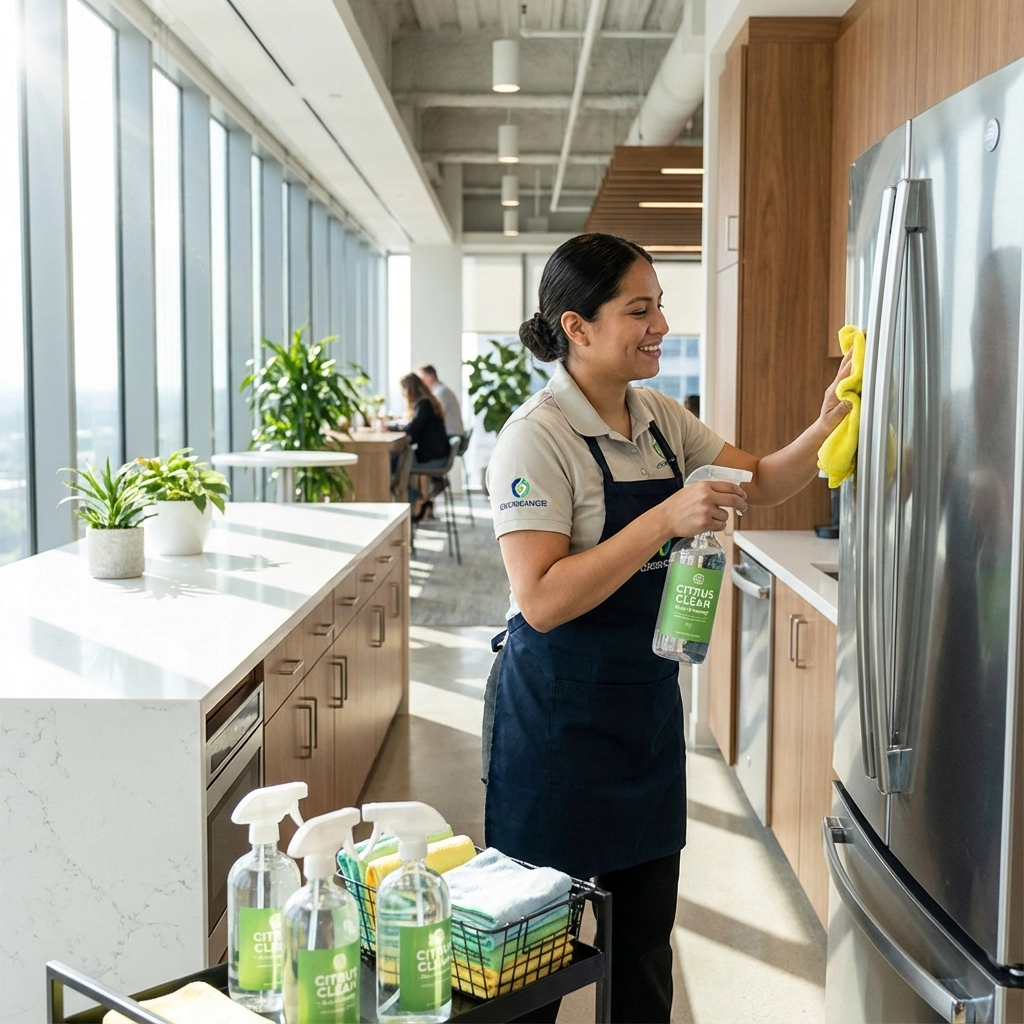
Your floor tells your story. Green, disciplined cleaning enhances trust.
- Employees: Fewer odors and irritants, safer floors, and clear standards build confidence and retention.
- Visitors and tours: Clean entryways, scent-neutral spaces, and organized housekeeping reassure customers and regulators.
- Community and recruiting: Sustainability and worker health matter to candidates—especially technicians and engineers evaluating your culture.
Bottom line: consistent, audit-ready cleanliness is a brand asset.
7) Technology and Verification
2026 cleaning programs pair sustainability with data.
- QR-coded or barcoded checklists with time-stamped completion
- Photo-verified completion for critical tasks and CAPA closeout
- IoT sensors for air quality and consumable levels where applicable
- Calibration logs for dilution and auto-scrubbers
- KPI dashboards (completion %, findings, response time), shared in quarterly reviews

8) Practical Checklist: Make Your Facility Audit-Ready
Use this checklist to strengthen compliance, safety, and PR before your next audit or customer tour.
- Documentation packet (binder or digital):
- SOPs and Master Cleaning Schedule by zone
- Last 90 days of completed logs with supervisor sign-offs
- Chemical inventory with SDSs and lot numbers
- Training matrix and records (onboarding + refreshers)
- Dilution/calibration logs and equipment maintenance records
- Waste/spill response procedures and incident logs
- Vendor COIs and service agreements
- Daily/shift tasks:
- Floors auto-scrubbed or mopped with neutral, fast-dry solutions; wet floor signage used and removed promptly
- Production zone wipe-downs with approved products; no overspray onto equipment or product contact areas
- Secondary containers checked for GHS labels and expiration
- Eyewash/first-aid stations unobstructed and stocked
- Breakrooms and restrooms restocked; touchpoints disinfected with approved, low-odor products
- Weekly/monthly tasks:
- High-dust surfaces, vents, and racking cleaned with HEPA methods
- Under-conveyor and behind-equipment detailing scheduled with maintenance coordination
- Auto-scrubber squeegees/pads inspected and replaced; battery maintenance logged
- SDS updates reviewed; obsolete chemicals removed
- Chemical management:
- Closed-loop or measured dilution; no “free-pour”
- Secure storage and clear separation by compatibility
- Empty-container handling and documentation in place
- Visitor and employee experience:
- Entrances, lobbies, and conference areas clean, scent-neutral, and organized
- Clear signage on safety and hygiene expectations
- Hand hygiene and spill kits visible and maintained
9) Implementation Roadmap for Blacksburg Manufacturers
Ready to align cleaning with audits and PR? Start here.
Phase 1: Assessment and Risk Map
- Walkthrough by zone; note findings tied to audits, safety, and PR
- Inventory chemicals, tools, and equipment; identify high-VOC and high-risk items
- Define KPIs: completion %, CAPA cycle time, audit findings, IAQ metrics
Phase 2: Standardize Products and Methods
- Replace harsh chemistries with certified, low-VOC, audit-friendly alternatives
- Deploy microfiber, color-coding, and closed-loop dilution
- Align cleaning SOPs with ISO/cGMP or site standards; approve with QA/EHS
Phase 3: Train, Launch, and Document
- Train teams on SOPs, HazCom, and PPE; record competencies
- Implement QR-coded checklists and time-stamped logs
- Begin supervisor inspections and photo verification for critical tasks
Phase 4: Verify and Improve
- Review KPIs monthly; close CAPAs and update SOPs as needed
- Prepare an “audit-ready” packet; conduct mock audits with EHS/QA
- Share results with leadership to reinforce culture and accountability
10) Regulatory Compliance and Risk Management
Green cleaning, done right, supports key requirements:
- OSHA/VOSH Hazard Communication: SDS access, training, and GHS labeling on secondary containers
- EPA and wastewater considerations: Reduced residues and careful disposal per local requirements
- ISO 9001/14001 alignment: Documented processes, controlled materials, and continuous improvement evidence
- Insurance and risk: Demonstrable controls, incident reduction, and preventive maintenance support better risk profiles
Proactive programs demonstrate due diligence, reduce findings, and make audits predictable—not stressful.
The Bottom Line for New River Valley Manufacturers
Your customers, auditors, and employees notice what your floors, air, and documentation say about your operation. Green, process-driven cleaning strengthens compliance, protects people, and improves brand perception—without slowing production.
Ready to see what audit-ready cleaning looks like in your facility? Request a walkthrough with a commercial janitorial partner who understands manufacturing compliance and PR in Blacksburg, Christiansburg, Radford, and the Roanoke Valley. Speak with a commercial cleaning professional.